Outside, a window washer watches me watching him, works his rhythm, window after window, simulating a seamlessness, tipping his squeegee after every-other downward stroke, coercing the water to run like blood from each overlapping pass, though of course he can’t touch my shining smudges, the smeared prints inside, seven-eighths of a glinting inch away.
A.J. Huffman is a poet and freelance writer in Daytona Beach, Florida. She has published 27 collections and chapbooks of poetry. In addition, she has published her work in numerous national and international literary journals. She is currently the editor for Kind of a Hurricane Press literary journals ( www.kindofahurricanepress.com ).
A bird built that nest from wig bits, or human hair, hard to say. Must have been some time ago. Before the storm, the bomb, the plague, whatever it was, who remembers? No bird, no eggs. Just discolored shell fragments and dried yellow goo. Depressing, don’t you think? Talk to your therapist about that and watch your step as we crab through the rubble; keep your beady eyes peeled. Alas, all these broken bricks put to rest the myth of the third little pig, if you know what I’m saying. maybe not. We tend to speak in metaphors these days, thus disguising our duplicity, confusion, and scorn. Everything doesn’t have to mean something, though everything usually does. You want the meaning of life? That’s it, in a nutshell, hombre. Keep moving, don’t stop. Feral dogs have been sighted. They don’t beg for treats. That monstrosity by the toppled tin water tower used to be a bridge. That’s right. I once rode my ten-speed over it. Nice view of the city then. Still kinda nice, if you thin your eyes. That red fork tangled in the rebar—it used to be a tricycle. Yeah. Another metaphor.
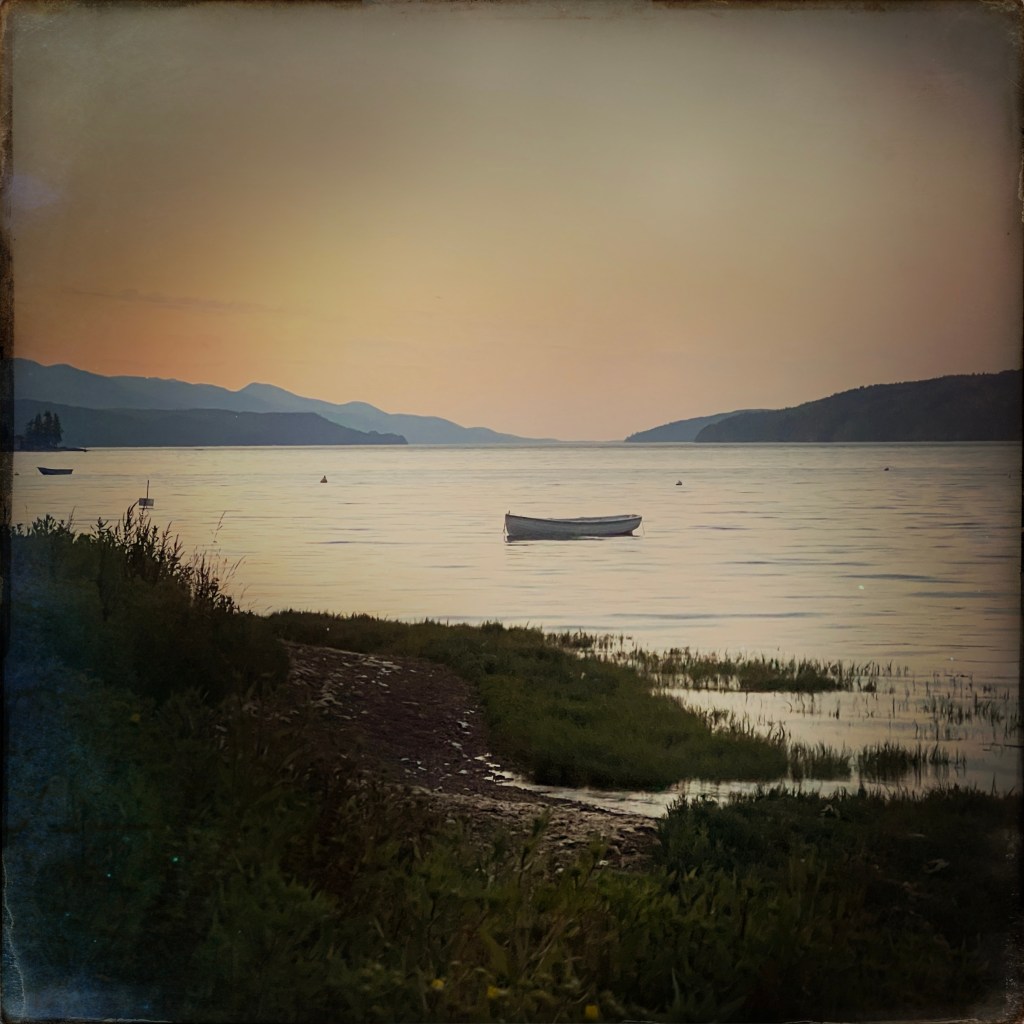
The sun sets behind the old oak tree on top of the hill, branches reaching long shadow-arms across grass that is spiky with old nettles and flowering thistles. Michael catches grasshoppers in his tiny fist and feels them tap, tap, tap against the insides of his fingers, trying desperately to get away. The barn cat watches from the branches, and the white-and- black dog lies curled up in the shade, panting with a smile. The air is colder next to the little creek. Crystal water floods over pebbles, and Michael’s feet go numb as he sticks them in. A tweet, barely a sound at all, rises like a dream. At its root, a baby bird, all beak and stuck-up feathers. It cries, crumbled on the ground, no parents in sight. Michael remembers the time the dog would not eat for days and how his mum could fix it. Determined, he scoops up the bird and feels its clockwork heart flutter against his palms. He rushes through late summer grass and air that smells like thunderstorms, the dog bouncing happily at his side. Before he arrives at his front door, the bird is dead.
Flash Fiction by Laura Martens
Image by Adam Strong
Laura Martens is based in London, UK, where she writes things and sells books. She loves skyscrapers, busy train stations, and cafés with window seats. Her writing has appeared in CP Quarterly, the Journal of Erato, and others.
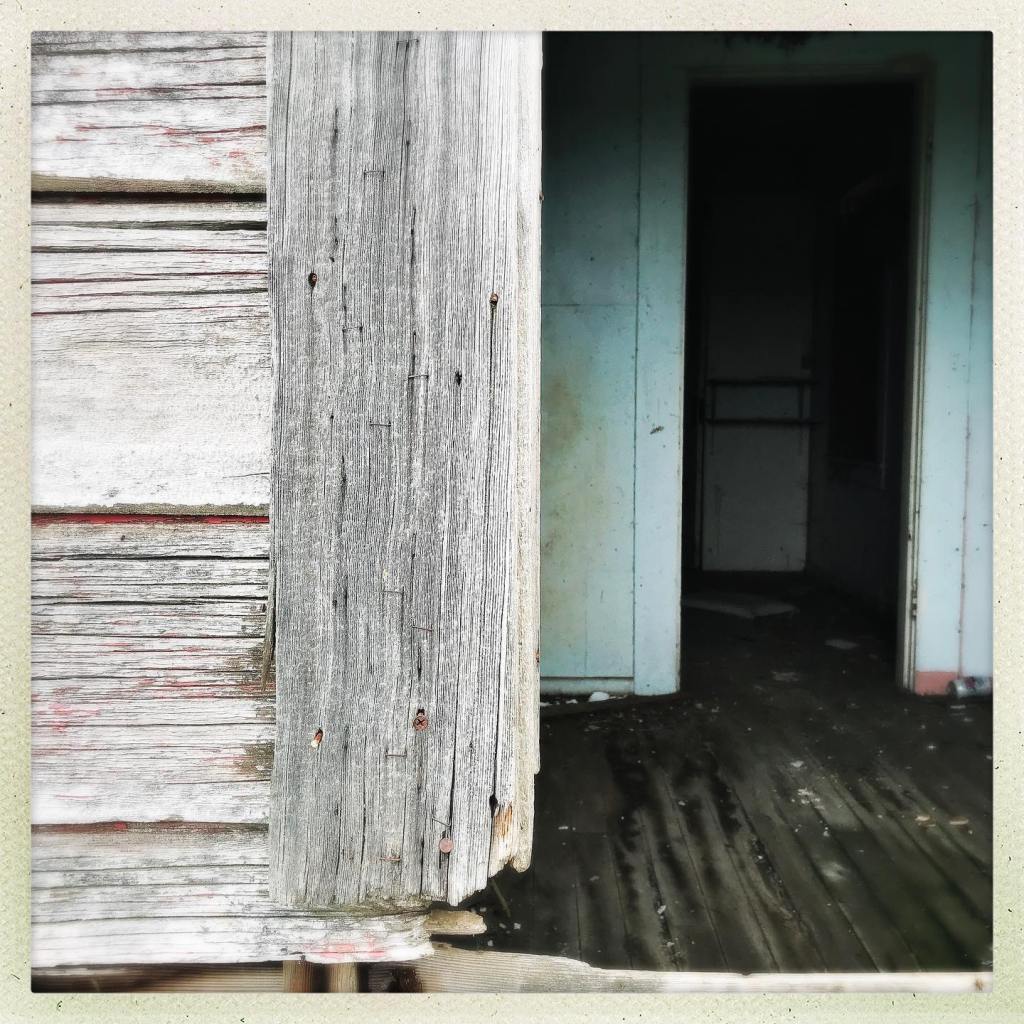
It’s a Sunday ritual, this absurdity─ two sets of flailing old bones trying not to injure each other─ but it’s the conduit to the weekly movie, which is what she’s really after. If the movie is bad, it still leads to a visit to the bistro. Tea and cake, cake and tea.
Husband and wife take their seats in the theater, and she recognizes the man next to her. Her cells know─ a tingle traveling along her spine into the roots of her hair─ before her brain catches on. She once slept with the man on a bed piled high with overcoats, the voice of her husband cracking his party joke in the next room. Now her husband is reaching across her lap to shake the man’s hand.
“We were neighbors thirty years ago,” he explains when the man looks confused.
“Sorry. I have trouble remembering things nowadays. My doctor has me on medication, but it’s not helping.”
The woman heaves a sigh of relief. Her one loose end, her big secret, is smothered and safe in the pocket of some overcoat somewhere.
Turning to face the silver screen, the man gives her a sidelong wink.
Story by Cheryl Snell
Image Courtesy Adam Strong
Cheryl Snell’s books include several poetry collections and a series of novels called Bombay Trilogy.
Recent pieces have appeared in Cafe Irreal, Roi Faingeant, New World Writing, and elsewhere.
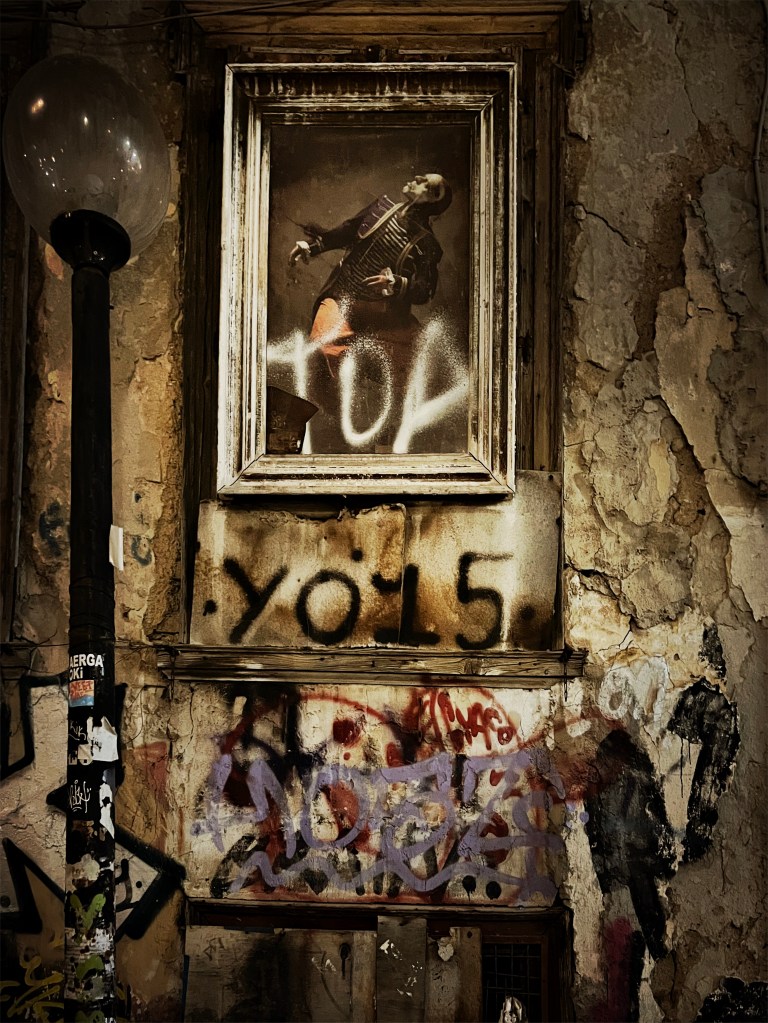
When things I knew faded, I made up facts. Glazed with my charm, they kept trouble away. My stories turned emptiness to childlike eagerness but always devolved upon some dragon. Driving and sailing over each continent, I wasted the wealth of my era and class (what’s the point of wealth without waste?). Tried to use the most passionate words I encountered, unsure what they meant. What I didn’t have, could have used, were names. Payphones had fled. Cities, campuses where I’d hypothesized contact stood empty; temp angels who lent me their couches and kindness were sacked. If I had it to do over again I’d be a song, with unpicturesque europoverty stamping its feet, the river too near, the singer thinking to claim the gold in the eye of a listening girl but it’s only for me.
Poem by Frederick Pollack
Image by Adam Strong
Frederick Pollack is the author of tw0 book-length narrative poems, THE ADVENTURE and HAPPINESS, both Story Line Press; the former reissued 2022 by Red Hen Press. Two collections of shorter poems, A POVERTY OF WORDS, (Prolific Press, 2015) and LANDSCAPE WITH MUTANT (Smokestack Books, UK, 2018). Pollack has appeared in Salmagundi, Poetry Salzburg Review, The Fish Anthology (Ireland), Magma (UK), Bateau, Fulcrum, Chiron Review,Chicago Quarterly Review, etc. Online, poems have appeared in Big Bridge, Hamilton Stone Review, BlazeVox, The New Hampshire Review, Mudlark, Rat’s Ass Review, Faircloth Review, Triggerfish, etc.
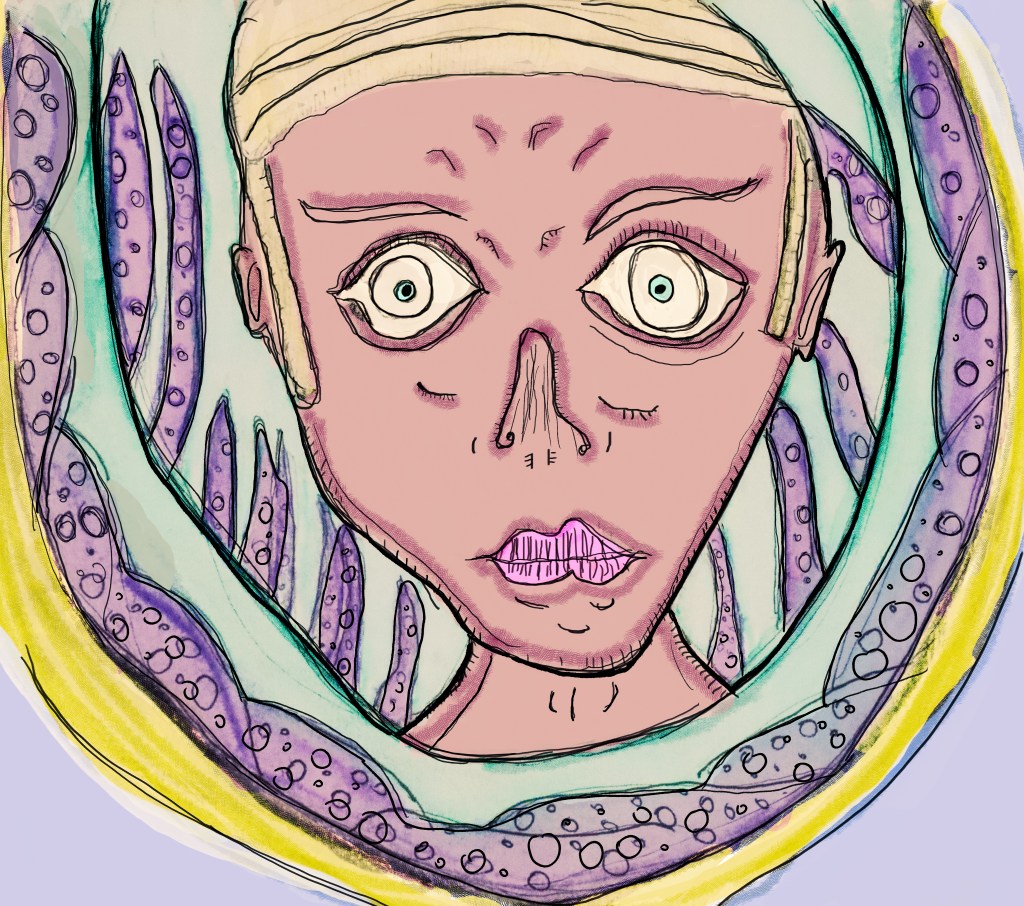
I wanted to name our daughter Nessie, partly for the Loch Ness monster in Scotland and partly for a wild girl I dated while studying abroad in Edinburg, but my wife wanted to name her Mildred after her grandmother who had been a lindy hop and jitterbug dancer in prominent clubs in New York back in the 1940s, who had been on Broadway, and who had starred in a couple of Marx brothers films. Her grandmother had died before we were married, and though I didn’t know her, she was described as flamboyant and always had a martini glass in her hand. I protested and said I didn’t feel that was a good image for our daughter. My wife countered that Nessie was a monster and our daughter would be bullied in school. We settled on Elizabeth after the Queen and hoped she had a long and wealthy life.
Flash by Niles Riddick
Image Courtesy Adam Strong
Niles Reddick is author of a novel, two collections, and a novella. His work has been featured in over four-hundred-fifty publications including The Saturday Evening Post, PIF, BlazeVox, New Reader Magazine, Citron Review, and The Boston Literary Magazine. He works for the University of Memphis in Tennessee.
“You have an empty heart, you know that?” he exclaimed and stared at her unblinkingly; his piercing blue eyes brimming with tears. She looked down at her plate, avoiding his gaze. She shouldn’t have ordered the Caesar salad, she thought. Even without the chicken and the croutons, the dish still had at least two hundred calories. “Unbelievable”, she could hear him murmur as he got on his feet; a stifled sob escaping his lips on his way out of the restaurant. She wasn’t fooled by his theatrics. She knew he didn’t care about her. Two years ago, before her weight loss, someone like him wouldn’t even have looked at her. Or worse, would have made fun of her. Every little comment, every little joke, seared into her brain; neatly sorted by date, location, people involved. People who looked like him, with their cheekbones, their abs, their soft hair. He didn’t care about her. She put down her fork and scanned the room; looking for the next person to fall in love with her empty stomach.



 Backwards Trajectory